
 |
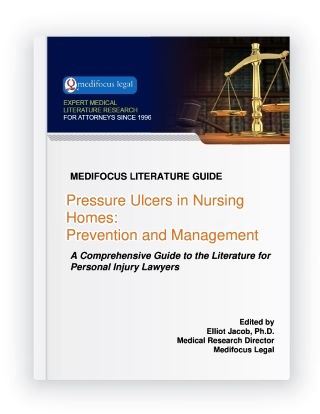
Pressure Ulcers in Nursing Homes: Prevention and ManagementA Comprehensive Guide to the Literature for Personal Injury Lawyers
Publisher: Medifocus Legal
Publication Date: January 26, 2026
Number of Pages: 106
A Comprehensive Guide to the Literature for Personal Injury Lawyers
Publisher: Medifocus LegalPublication Date: January 26, 2026
Number of Pages: 106
Pressure ulcers represent a significant concern in nursing homes, with prevalence rated ranging from 2.2% to 39% depending on the population studies. In many cases, these ulcers develop rapidly, highlighting the vulnerability of nursing home residents. According to the National Pressure Injury Advisory Panel (NPIAP), approximately 70% of all pressure ulcers occur in individuals over the age of 65, a demographic that predominantly occupies nursing homes.
Preventing pressure ulcers is a key responsibility of nursing home staff and involves several strategies, including:
1. Regular skin assessment to identify any early signs of pressure ulcers.
2. Implementing a turning schedule, where residents are repositioned every 2 hours.
3. Specialized mattresses and cushions to provide additional support and redistribute pressure.
4. Adequate hydration and nutritional support to promote skin integrity.
5. Staff training regarding the prevention and management of pressure ulcers in the nursing home setting.
For residents who do develop pressure ulcers, prompt and effective treatment is crucial. Treatment may include wound care, such as cleaning, debridement, and applying appropriate dressings to promote healing. Advanced therapies, including negative pressure wound therapy and bioengineered skin substitutes, may also be utilized for more severe cases.
Pressure ulcers pose significant medical-legal challenges in nursing homes. Failure to prevent or adequately treat pressure ulcers can be seen as neglect, leading to potential legal action against facilities or staff. Legal claims often focus on allegations of substandard care, with plaintiffs citing inadequate assessment, improper documentation, or insufficient staff training. Consequently, a proactive approach to prevention and thorough documentation of care are essential to mitigate risks, safeguard resident health, and protect against legal repercussions.
~~~
Pressure ulcers remain one of the most preventable yet devastating injuries suffered by nursing home residents. For personal injury attorneys handling these cases, success often hinges on the ability to clearly demonstrate what the medical literature says should have been done versus what actually occurred. Our Medical Literature Guide on the Prevention and Treatment of Pressure Ulcers in Nursing Homes is designed precisely for that purpose.
This attorney-friendly guide includes decades of peer-reviewed medical research, clinical guidelines, and authoritative consensus statements into a single resource. Instead of wading through dense medical journals, lawyers gain direct access to the specific literature pertaining to the standards of care governing pressure ulcer risk assessment, prevention, monitoring, and treatment in long-term care facilities. The result: faster case evaluation, stronger pleadings, and more persuasive expert cross-examinations.
The guide covers the full life cycle of pressure ulcers, from early risk identification to advanced wound management. It addresses critical topics such as repositioning protocols, pressure-reducing support surfaces, skin assessments, and timely intervention to avoid skin breakdown, infection, sepsis, and death—outcomes that juries readily understand when supported by authoritative medical sources.
Pressure ulcer cases are often defended as "unavoidable." This guide equips plaintiff's counsel with the medical science needed to challenge that narrative. By demonstrating that the vast majority of pressure sores are preventable with basic, well-established care, attorneys can more effectively hold nursing homes accountable for neglect.
For personal injury lawyers representing vulnerable residents and their families, this medical literature guide is more than a reference-it is a strategic tool to level the playing field, strengthen liability arguments, and improve outcomes in pressure ulcer litigation.
The MediFocus Literature Guide to Pressure Ulcers in Nursing Homes is available as a soft-cover book or a PDF download. When you order the soft-cover book, we also include the PDF format at no additional cost. Order your copy today!
Please see the side panel for ordering information.
 |
- A comprehensive bibliography of 137 journal article references indexed in MEDLINE published in well respected medical and scientific journals.
- Online access to the abstracts (summaries) of the articles.
- Online access to the free full-text version of 66 articles.
- Links to full-text sources of other articles that are available for purchase directly from individual journal publishers.
- A unique "Author Directory" consisting of the names and institutional affiliations of experts who have published and have specialized knowledge about Pressure Ulcers in Nursing Homes: Prevention and Management. The "Author Directory" is a valuable resource for quickly identifying and locating experts for case reviews, opinions, and testimony.
Select examples of topics that are covered by the articles referenced in this Guidebook include:
- Clinical negligence claims for pressure injuries from the perspective of a tissue viability medicolegal nurse expert.
- Avoidable and Unavoidable Pressure Injuries Among Residents Living in Nursing Homes: A Retrospective Study.
- Reducing avoidable harm caused by pressure ulcers.
- Accountability and legal issues in tissue viability nursing.
- Under pressure: nursing liability and skin breakdown in older patients.
- WHS guidelines for the treatment of pressure ulcers-2023 update.
- Interventions for pressure ulcers: a summary of evidence for prevention and treatment.
- Risk Factors for Pressure Ulcers Including Suspected Deep Tissue Injury in Nursing Home Facility.
- Guidelines for the diagnosis and treatment for pressure ulcers.
- Facility Characteristics and Risk of Developing Pressure Ulcers in US Nursing Homes.
- Treatment of pressure ulcers: a clinical practice guideline from the American College of Physicians.
- Risk assessment and prevention of pressure ulcers: a clinical practice guideline from the American College of Physicians.
- Repositioning for treating pressure ulcers.
- Nurses' pressure ulcer related judgements and decisions in clinical practice: a systematic review.
- Risk assessment tools for the prevention of pressure ulcers.
- Pressure ulcer-related pain in nursing home residents with cognitive impairment.
- Pressure ulcer risk assessment and prevention: a systematic comparative effectiveness review.
- Patient risk factors for pressure ulcer development: systematic review.
- Successful implementation of clinical practice guidelines for pressure risk management in a home nursing setting.
- Preventing pressure ulcers--Are pressure-redistributing support surfaces effective? A Cochrane systematic review and meta-analysis.
is available in two formats: | |
Order by Phone:To order by phone, please call: Order by Mail:To order by mail, please print and complete this Order Form | |